
Fidget Toys: A Small Step Towards Developing a Neuroinclusive Workplace

Featured Image by Aristal Branson from Pixabay
Whether it’s bouncing a knee, tapping your fingers on a table, or absentmindedly clicking a pen, many adults are prone to fidgeting. Research and anecdotal evidence has found that for individuals who identify as neurodivergent, such as those with ADHD, autism, dyslexia and dyspraxia, fidgeting can have numerous benefits and serve a myriad of different functions. Many neurodivergent people report finding fidget toys incredibly helpful when working on projects and completing tasks. In this article we aim to highlight the fantastic benefits of working towards a neuroinclusive workplace and embracing the use of fidget toys, we’ll outline the various functions of different fidget toys and finally cover how employers can start to introduce them into their workplaces.
The advantages of neurodiverse workplaces
Up to 20% of the UK population are neurodivergent and they make up a significant percentage of the workforce. Neurodiverse workplaces are often preferable for most employers as extensive research has frequently found them to be more innovative, superior at problem solving in comparison to non-diverse workplaces and more productive. Therefore, embracing and retaining employees who are neurodivergent often gives many organisations a competitive advantage. For this reason, it is of great importance for employers to ensure that their neurodiverse workforce can perform at their best.

Image by congerdesign from Pixabay
Creating a neuroinclusive work environment
Neurodivergent employees are frequently faced with work environments which impact their ability to perform successfully. There is often a lack of understanding around appropriate reasonable adjustments and they may be faced with unconscious biases and discrimination. These factors can make the work environment a challenging place for those who are neurodiverse and often leads to individuals feeling forced to mask.
Masking refers to neurodivergent individuals suppressing their neurodivergent traits in an effort to conform to neurotypical expectations. For example, an autistic person who stims (That is, they engage in self-stimulatory behaviour, such as repetitive actions to self-soothe or regulate sensory input) may suppress this behaviour when in the workplace. Masking is exhausting and frequently leads to the development of mental health issues, burnout and poor work performance. Because of this, lots of employers are missing out on the untapped potential of their neurodiverse workforce.
There are many ways employers can work to develop a neuroinclusive environment where those who are neurodivergent feel empowered and do not feel the need to mask. Allowing and supporting the use of fidget toys in the work environment can contribute to creating a working environment where individuals who stim, have various sensory sensitivities, processing differences and energy levels feel welcomed, valued and able to reach their full potential.

Image by Ronald Carreño from Pixabay
Why do we fidget?
Fidgeting can be defined as the act of making small, continuous movements, usually with your hands or feet, which do not have any particular purpose and are unrelated to any ongoing tasks. We may fidget for a variety of reasons including:
- Boredom
- Restlessness
- Stress
- Discomfort
- Impatience
- Habit
The benefits of using fidget toys at work
There are many ways fidget toys can be useful in the workplace. Below we’ve outlined some ways that fidgeting with fidget toys may boost workplace productivity for individuals who are neurodivergent.
Improved memory: An interesting study conducted on lecture attendees found that the more they fidgeted the more information they were able to retain from the lecture. This suggests that the act of fidgeting may in some circumstances have a positive effect on the way an individual processes information and consequently their memory retention. Therefore, allowing employees to use fidget toys may enable them to retain more information than they would be able to if they were forced to stay still.
Stress management: Being neurodivergent in a world designed for neurotypical people can lead to many challenges which increase the risk of experiencing stress and anxiety. Experiencing high levels of stress at work can hamper productivity and lead to burnout. Evidence suggests that the rhythmic act of fidgeting may have a calming effect on the nervous system. For individuals who are anxious, having something to keep their hands busy, such as a fidget toy, can provide a source of distraction, helping to reduce tension and rumination, allowing them to stay calm and level-headed in high pressure situations.
Increased focus: Research has found that neurodivergent individuals, particularly those with ADHD who have a tendency to fidget, are frequently able to focus better the more they move. These individuals may find that they work best whilst on the move, carrying out practical tasks or after taking a break to walk around. Interestingly, studies have found that making small micromovements stimulates the release of neurotransmitters in the brain which are essential for maintaining attention and focus. Therefore, using fidget aids at work may enable individuals to stay alert and remain focused without feeling the need to move around as much whilst carrying out desk work, or when sitting down in meetings.
Channel restless energy: Some neurodivergent individuals may have very high levels of energy, often making them highly motivated, enthusiastic employees. However, such high energy levels can sometimes make it challenging for them to stay on task. For these individuals, having an energy outlet to channel their surplus energy may help improve their ability to concentrate. One reason for this may be explained by research, which has found that for some individuals, keeping their hands occupied can provide gentle sensory input, which incredibly, allows their brains to filter out distractions. This means that they may find using fidget toys particularly helpful for staying on task.
Increased creativity: Fidgeting can help reduce stress levels. When individuals are relaxed they are more likely to find it easier to come up with innovative solutions to problems. Therefore, using fidget devices which calm the nervous system can promote relaxation which may boost an individual’s creative performance. Additionally, using fidget toys can help to stimulate different parts of the brain, helping to enhance problem-solving skills.
Relives Boredom: We all require an optimum level of stimulation in order to concentrate on prolonged, monotonous tasks. If a task involves a lot of repetition it may lead to boredom and reduced productivity. A study found that for individuals with ADHD, fidgeting helped to reduce inattention whilst completing long cognitive tasks. Using a fidget toy whilst carrying out repetitive tasks, may provide enough physical stimulation to increase a workers energy levels and engagement and reduce their mental fatigue.
Stimming: Fidget toys may be helpful for individuals with autism who stim, as they can provide a structured, therapeutic way to meet their sensory needs.

Image by zakia Mahsoumi from Pixabay
Choosing the right fidget toys
We all work in different environments and require different conditions in order to work effectively. Fidget toys can be used for many different reasons which vary from person to person. For example:
- Tactile fidgets: An individual who has sensory processing differences may crave tactile sensory input in order to feel grounded. They may prefer fidget toys, such as fidget cubes, porcupine balls or velcro strips which may help stimulate their tactile system and help them to feel regulated and focused.
- Calming fidgets: Calming fidget aids are generally quiet, such as worry stones, sensory bottles with colourful water and stretchy bands. These types of fidget toys can provide an outlet for restless energy and anxiety during moments in the workplace where quietness is expected.
- Spinning fidgets: Toys, such as fidget spinners may be useful when someone requires a visual distraction to calm down. Focusing on the movement may help to relax their nervous system.
- Alerting fidgets: Alerting fidget toys, such as pull and stretch pop tubes, or colour changing balls, may be helpful for people who require light, colour and sound in order to help them focus and manage hyperactivity.
- Chewy fidgets: For individuals who are prone to biting their nails, or the tops of pens and are able to concentrate better when chewing something, they may find it helpful to use fidget jewellery, such as chewy necklaces and bracelets made of silicone. These fidgets may also help them to self-regulate.
- Resistance fidgets: Fidget toys such as putty, stress balls and squishy objects may be useful for people who are more likely to stay focused on a task when they are able to squeeze, press and pull objects with their hands.
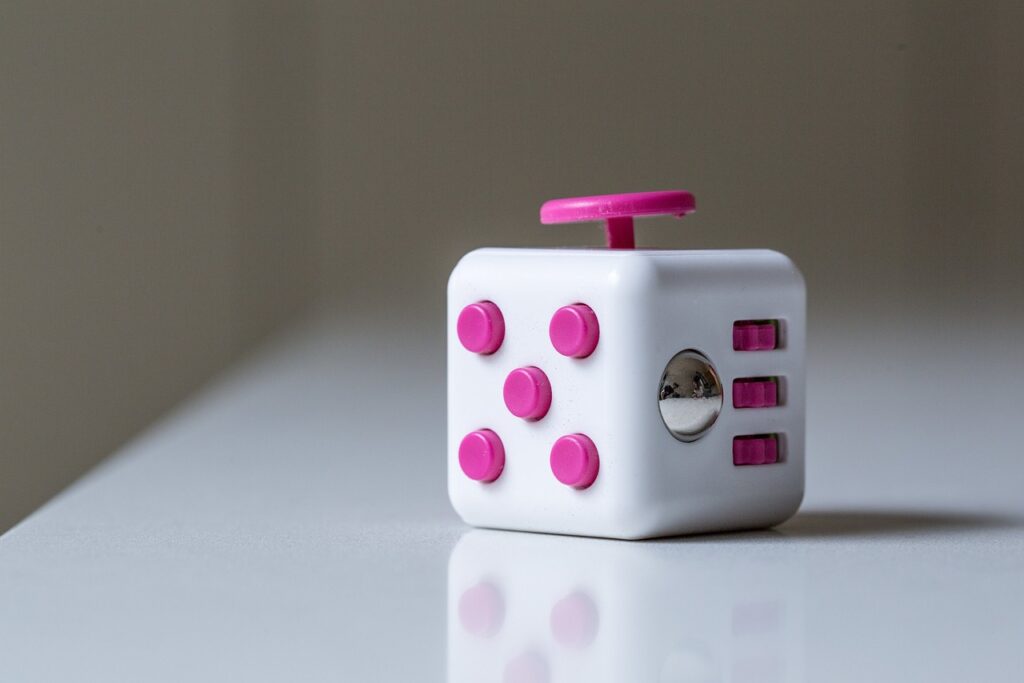
Image by StockSnap from Pixabay
20 types of fidget toy
There are many types of fidget toys on the market. Below we’ll list 20 popular toys which you may wish to introduce to your workplace.
- Stress balls
- Cubes
- Lava lamps
- Spinners
- Bands
- Rings
- Putty
- Slime
- Beads
- Worry stones
- Pens
- Sensory bottles
- Colour changing light-up balls
- Magnetic balls
- Pop beads
- Sensory sand
- Fidget puzzle sets
- Push poppers
- Turn and twist tangle fidgets
- Fidget paper
There are many companies which you can purchase fidget toys from including tink‘n’stink , sensory toy warehouse and sensory direct
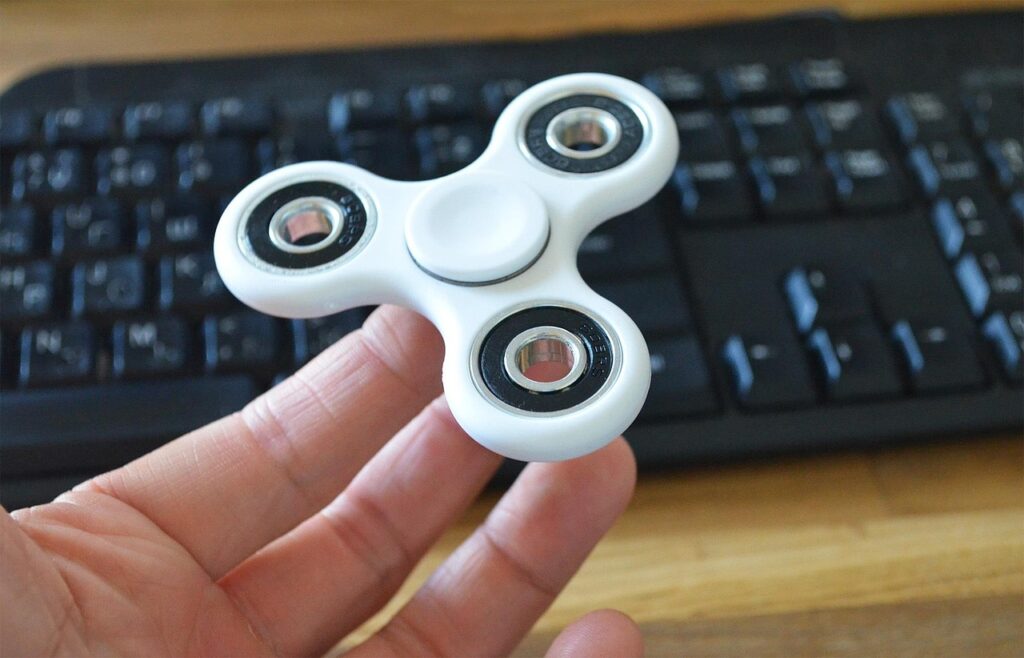
Image by Mediamodifier from Pixabay
Introducing fidget toys to the workplace
All employers can benefit by creating work environments which are neuroinclusive and optimise the talents and skills of their neurodiverse employees. These environments enable workers to feel comfortable displaying their neurodivergent traits without stigma and allow adaptations which support them to perform their roles with greater ease, better manage their stress levels and take into consideration any possible processing differences and sensory sensitivities. Creating a work environment such as this can increase the focus, creativity and performance of those who are neurodivergent. Providing and encouraging the use of fidget toys in the workplace is one way employers can make a step towards achieving a neuroinclusive workplace.
There are many ways employers can create an environment which welcomes the use of fidget toys. We have outlined some below:
- Invite employee participation: Each employee will have different individual needs and preferences. Consult your neurodivergent employees about your strategy and approach to making your workplace more neuroinclusive.
- Normalise neuroinclusion: Employers can normalise the use of fidget toys by making them visible and readily available for all. This sends a powerful message that creating an environment where different working styles are valued and accommodated is of great importance to an organisation.
- Workplace wellbeing: Promote the use of fidget toys for productivity and stress management by providing an easily accessible collection of toys for all employees in break rooms, or areas where downtime is expected.
- Different fidgets for different spaces: Engage with neurodivergent employees to get their input on the best selection of fidget accessories for different areas of the workplace. For example, employees may choose to have access to calming fidgets for meeting rooms and alerting fidgets on their desks.
- Psychological safety: Create an environment where people feel able to call out practices that they don’t feel are neuroinclusive, without fear of negative consequences and where ideas are encouraged from all staff.
- Neurodiversity network: Support workers to develop a neurodiversity network where those who identify as neurodivergent feel empowered to review their organisations practices and policies and influence change to create a neuroinclusive workplace.
- Build an inclusive team culture: Employers can arrange training for staff and line managers to raise awareness of neurodivergent conditions and highlight the benefits of having a neurodiverse workplace and of neuroinclusion for teams and organisations. This may help to build an appreciation of and consideration for other peoples different working styles and preferences. Research has shown that inclusive cultures increase staff loyalty and help to attract and retain neurodivergent talent.
Conclusion
Employers play a crucial part in fostering an environment which is neuroinclusive. Fidget toys can be a hugely beneficial tool for individuals who are neurodiverse. Providing and allowing the use of fidget toys in the workplace can help to create an environment which promotes positive ways of managing stress, increases productivity and can be beneficial not just for neurodivergent employees, but also for those in the larger workforce.
Would you like to gain a better understanding of neurodiversity and how you can make your workplace more neuroinclusive? If the answer is yes, why not take a look at our Neurodiversity Awareness Training, available for your whole organisation.
Sources
- Masking: https://www.autism.org.uk/advice-and-guidance/topics/behaviour/masking#:~:text=Examples%20of%20this%2C%20which%20may,eye%20contact%20you%20are%20making
- Neurodiversity and cognitive diversity statistics: https://cognassist.com/neurodiversity-statistics-and-research/
- The science behind fidget toys: https://blog.sensoryedge.com/the-science-behind-fidget-toys/
- Everyday attention and lecture retention: the effects of time, fidgeting, and mind wandering: https://pmc.ncbi.nlm.nih.gov/articles/PMC3776418/
- Fidget toys aren’t just hype: https://www.scientificamerican.com/article/fidget-toys-arent-just-hype/
- Repeated movements and behaviour (stimming): https://www.autism.org.uk/advice-and-guidance/topics/about-autism/repeated-movements-and-behaviour-stimming
- Neuroinclusion at work: https://www.cipd.org/en/knowledge/guides/neuroinclusion-work/#:~:text=Neuroinclusive%20management%20and%20leadership%20means,processing%2C%20learning%20and%20communication%20styles.
- 6 types of fidgets for kids with adhd: https://www.understood.org/en/articles/fidgets-for-kids-with-adhd
- Fidget toys: https://www.tinknstink.co.uk/fidget-toys?srsltid=AfmBOorSTfgkeFV5hpoMFX6-iDF1kNK0L8TkSGPrl7J4QVUryia61eTq
- Fidget toys to reduce stress and anxiety: https://www.autismparentingmagazine.com/fidget-toys-to-relieve-stress-anxiety/#:~:text=For%20children%20on%20the%20autism,to%20meet%20these%20sensory%20needs.
- Fidget toys, crocheting and doodling during meetings?: https://www.kornferry.com/insights/this-week-in-leadership/fidget-toys-crocheting-and-doodling-during-meetings
- Fidget sliders and spinning tops: Unconventional ways to boost productivity https://www.brucecharlesdesigns.com/blogs/news/ways-to-boost-productivity?srsltid=AfmBOooDr7SvvkvvnLSebngEkoQl8nu4ZZ4yifm2tVrCS_-awRohHw4V
- How fidgeting improves focus and productivity: https://stimara.com/blogs/stimagz-blog/fidgeting-forfocus?_ab=0&_fd=0&_sc=1&srsltid=AfmBOooNwXinLZxFkX8WDnjY6iJCdEle7M37y1PZ0CtOz_qmBRjngr0j
- How to develop a neuroinclusive culture at work: https://www.autistica.org.uk/get-involved/employers/employers-guide/neuroinclusive-culture