
What It Feels Like to Mask at Work When Neurodivergent

Featured Image by Ketut Subiyanto Pexels
What Is Masking?
For years, I didn’t realise I was masking at all… that is, putting on a ‘front’ of sorts to blend in as a member of a neurotypical society. For years, I didn’t realise that I often dissociated so that I could cope, so that I could reach a plateaued stage in which I was able to basically function, albeit on a strange uniquely me kind of auto pilot setting. When I realised that I dissociated, I realised too that a huge way in which I conquered my social anxiety in adult life situations, was to welcome the dissociation and often overcompensate, by being overly-friendly with people.
I never had any complaints… at job interviews, people began to tell me that they were delighted to meet ‘a fellow optimist’. I wasn’t of course… inside I am always panicking. I love the fumbled together, utterly illogical analogy from Benedict Cumberbatch’s Martin Crieff, in the Radio Series, Cabin Pressure: “I’m like a capsized duck: I’m paddling like hell on top, but underneath, I’m really calm.”
Being neurodivergent, especially if like me you juggle more than one kind of this unique wiggly stuff in your head, feels illogical at times. It feels like parts of you just don’t add up. You know what to do, or you think you do, but doing these things in practice is so much harder. You feel like you have to do so much additional preparation for life, but then have to cope with the huge adrenaline dump when you get to your safe place… or a place, or state in which you know it’s safe to unmask. I like organisation, yet, because of my dyspraxia, I struggle to be organised. I feel like a walking (well, often tripping actually) paradox.
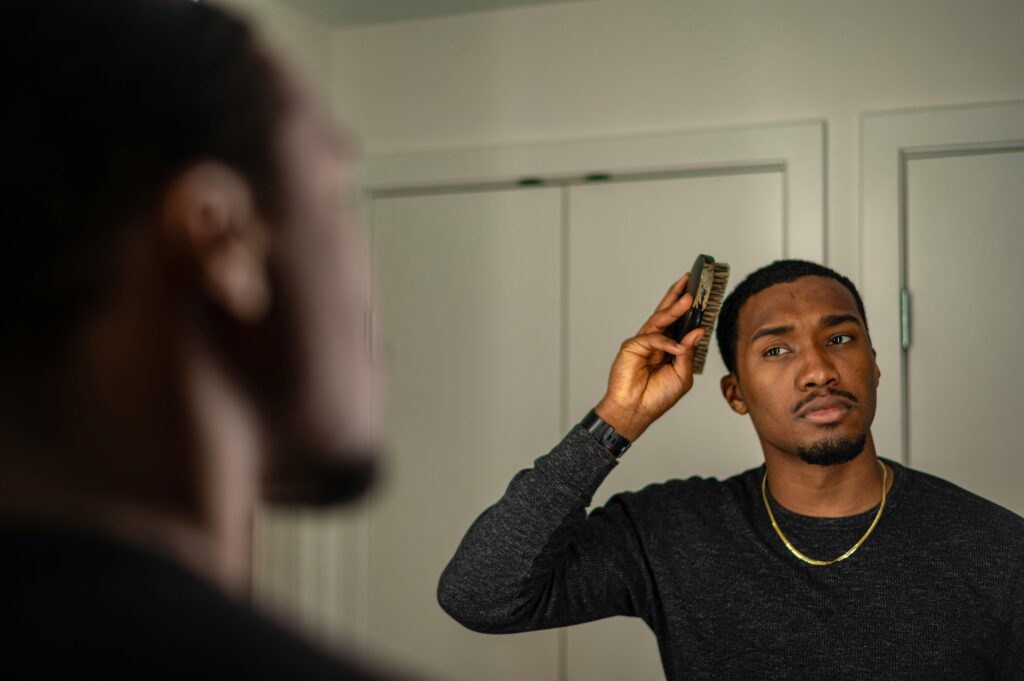
Photo by PNW Production
Burning Out
It took me a long time to realise that many people have different ‘modes’ at work, but some people really don’t… and to be honest, I tend to be the latter. If I focus too much on what I am doing, I lose sight of me and who I am… what I need and what I am entitled to. I work hard at the job, but not on looking after myself. Unfortunately, burnout is an issue that a lot of neurodivergent people struggle with, because of that difficulty with maintaining a work-life balance.
I still don’t think I know what that is you know… and maybe I am okay with that. It sounds like genuine balance as a concept is wacky life coach spiel or AI talking. The fact remains though that it can already be hard enough to advocate for accommodations at work, as a neurodivergent person and if your coping mechanisms at work make this even harder, then it’s possible this is not the environment, or strategy for you.
I left one job… cold turkey, with no back-up because I realised that my colleagues thought the masking me that they saw was the real me. I lost who I was. My anxiety seeped out of my pores, no matter how much I tried to hide it and my ways of working as an independent, became painfully rigid. I did help others, but too much, to the point that I lost sight of my own responsibilities. I was not incompetent, but some things were just not workable and unfortunately my manager and my team would not help me to work on this. From their perspective, people like me didn’t have a serious job like them.
It’s only after months of reflection… over a year in fact, that I have been able to verbalise how that felt and the truth: I was bullied and I suffered from autistic burnout. What I went through led me to seek out an autism diagnosis and since then I have been on such a powerful, irreducible journey of self-reflection. I am grateful for this, because I was able to turn a nightmare into a learning opportunity, into another few spaces moved ahead in the boardgame of life that is the learning curve of resilience.
A Coping Mechanism Which Is “Sometimes Like a Friend”…
The thing about masking is that it’s a neutral state. It isn’t bad or good, it’s a coping mechanism and in this way, for many, it is utterly unconscious. Sometimes it feels like a friend, sometimes it’s a nagger and sometimes it chips away at one’s self-esteem. Masking is more than a double-edged sword: it’s a Swiss army knife. There are some helpful things in there, but also some weird things… like an old sock, or some dental floss, but it may come in handy one day, you never know. Being neurodivergent is like being a plate spinner, because life is unpredictable, but you can learn more and more efficient ways to pick up the broken plates afterwards.
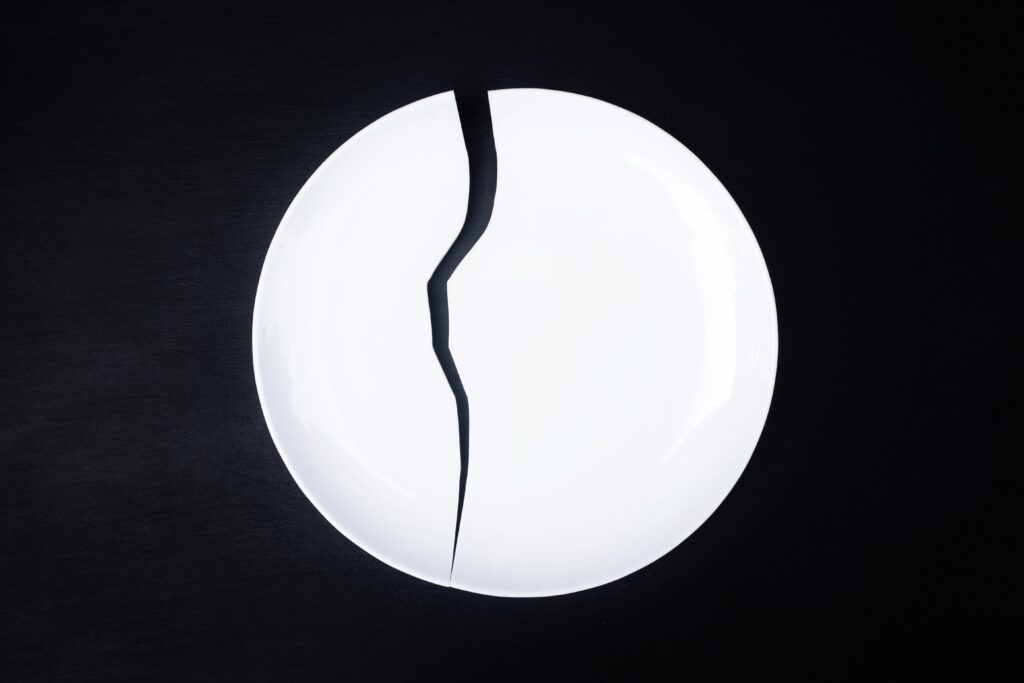
Photo by Julia Filirovska
The Twinkliest Version of Me
I am not going to say that the perfect workplace is one where you don’t have to mask, because for many people, masking is what makes them feel safe and your safety will always be the most important thing. What I will say though is that I do believe that in time, we can all come to see our masking as a friend, or at least a thing that is not good or bad, simply a thing that just is.
I’m still not fully there, but now, I am okay with that. And maybe one day those I meet will see the twinkliest version of me most of the time, but it’s okay to be okay with just the glimpses… the sequins and glitter that you find in the nooks and crannies, weeks after the craft bits and bobs have been tidied away.