
Tourette's syndrome
This page shares NHS-aligned information about Tourette’s syndrome alongside Exceptional Individuals’ experience of supporting people with Tourette’s in education, employment and everyday life. We also signpost to trusted clinical and support organisations for anyone who wants medical advice, assessment or treatment.
Important:
Exceptional Individuals is not a medical or diagnostic service.
If you are concerned about tics or Tourette’s Syndrome, please speak to a GP or qualified clinician.
What is Tourette’s syndrome?
Tourette’s syndrome is a neurological condition that causes a person to make involuntary movements and sounds, known as tics. At Exceptional Individuals, we have experience employing and supporting people with Tourette’s in the workplace. Our understanding has been shaped by direct lived experience, including internal training delivered by a colleague with Tourette’s who also contributed to our 2018 Social Impact Report. This training helped our team better understand the day-to-day realities of Tourette’s from a personal perspective. We specialise in creating inclusive and supportive work environments where people can thrive and be accepted as they are. While we do not diagnose or provide medical treatment, we can signpost to trusted clinical and support services for anyone seeking professional assessment or care.
According to the NHS, Tourette’s is a type of tic disorder that usually begins in childhood, often between the ages of 3 and 9. Tics can change over time, and their frequency and intensity can vary.
Source: NHS Tourette’s overview - https://www.nhs.uk/conditions/tourette-syndrome/
Some people experience mild tics that have little impact on daily life. Others experience more frequent or complex tics that can affect school, work and social situations.
Tourette’s is not a mental illness or a personality trait. It is understood to involve differences in how the brain controls movement and behaviour.
What are tics?
Tics are sudden, repeated movements or sounds that a person cannot fully control. One of our colleagues, who has Tourette’s, has spoken about how his tics have changed throughout his life. At times they have mainly involved body movements, and at other times more vocal tics. Over time, he has learned to talk openly about his tics with people he works with, which has helped build confidence and reduce anxiety around how others might react.
A small minority of people with Tourette’s experience coprolalia, which involves saying socially inappropriate words or phrases. This is often misunderstood and is not typical of most people with Tourette’s. In our experience at Exceptional Individuals, many people wrongly assume this is what Tourette’s usually looks like, when in fact this is not supported by clinical evidence.
Tics can increase with stress, tiredness or excitement and may reduce when someone is relaxed or deeply focused.
Source: NHS Tics information
https://www.nhs.uk/conditions/tics/
In clinical guidance, tics are commonly grouped into two types:
Motor tics
Motor tics are involuntary physical movements that involve the muscles of the face, head, body or limbs. They can be simple, involving a single muscle group, or more complex, involving a sequence of movements.
Common examples include:
-
Eye blinking or eye rolling
This can involve rapid blinking, squeezing the eyes shut, or rolling the eyes upwards or to the side. It may look like someone is deliberately making a face, but it happens without conscious control. -
Facial movements
These can include grimacing, twitching the mouth, or pulling facial muscles in certain ways. Some people are not aware they are doing this until someone points it out. -
Head or shoulder jerks
This can involve sudden nodding, jerking the head to one side, or lifting or rolling the shoulders. These movements may be brief but can happen repeatedly. -
Arm or body movements
Some people experience arm flicking, tapping, or movements of the torso. These can sometimes be more noticeable or disruptive, especially when sitting still for long periods.
Vocal (phonic) tics
Vocal or phonic tics involve sounds or spoken elements that are produced involuntarily. These do not have to be full words and are often short sounds.
Common examples include:
-
Throat clearing or coughing
This may sound like someone has a persistent sore throat or is trying to clear their voice, but it happens repeatedly and without control. -
Sniffing or breathing sounds
Some people make repeated sniffing noises or sharp intakes of breath, even when they do not have a cold or blocked nose. -
Grunting or other short noises
These can include humming, clicking, or brief vocal sounds that occur suddenly. -
Repeating words or sounds
Some people repeat their own words, repeat what others say, or repeat particular sounds. This can be confusing for others, but it is part of how tics can present.
A small minority of people with Tourette’s experience coprolalia, which involves saying socially inappropriate words or phrases. This is often misunderstood and is not typical of most people with Tourette’s.
At Exceptional Individuals, one of our colleagues who had Tourette’s experienced both motor and vocal tics. At the time, his motor tics showed up mainly through eye blinking, eye rolling, and head or shoulder jerks. He chose to sit in a quieter area of the office, and we made those adjustments to support him.
He was open and confident about his Tourette’s and delivered a talk to the team about his experiences, which helped everyone better understand what Tourette’s looked like in practice.
His vocal tics included occasional throat clearing and coughing. Before he started working with us, he explained this to the team so people knew what to expect, which made day-to-day work more comfortable for everyone.
Learning about Tourette’s through his lived experience was eye-opening for our team. It is something we have continued to draw on when supporting others with similar experiences.
He was a highly valued and successful member of the team and played an important role in helping to build Exceptional Individuals into what it is today. He was also part of UK support communities that helped him with disclosure and self-advocacy, which in turn helped us understand Tourette’s better and share those insights with others.

How Tourette’s is diagnosed
There is no single medical test for Tourette’s. There is no single medical test for Tourette’s. According to the NHS, diagnosis is usually made by a specialist based on a person’s history of motor and vocal tics over time. One of our colleagues has shared that his parents first noticed his tics when he was a child and took him to their GP, which eventually led to a referral to a specialist who confirmed his diagnosis.
According to the NHS, diagnosis is made by a specialist (such as a paediatrician, neurologist or psychiatrist) based on:
-
the pattern of tics
-
how long they have been present
-
whether both motor and vocal tics are involved
-
the person’s developmental history
If someone is concerned about tics, the NHS recommends starting by speaking to a GP, who can arrange referral to specialist services if needed.
Source: NHS Tourette’s overview - https://www.nhs.uk/conditions/tourette-syndrome/
Other conditions that can occur alongside Tourette’s
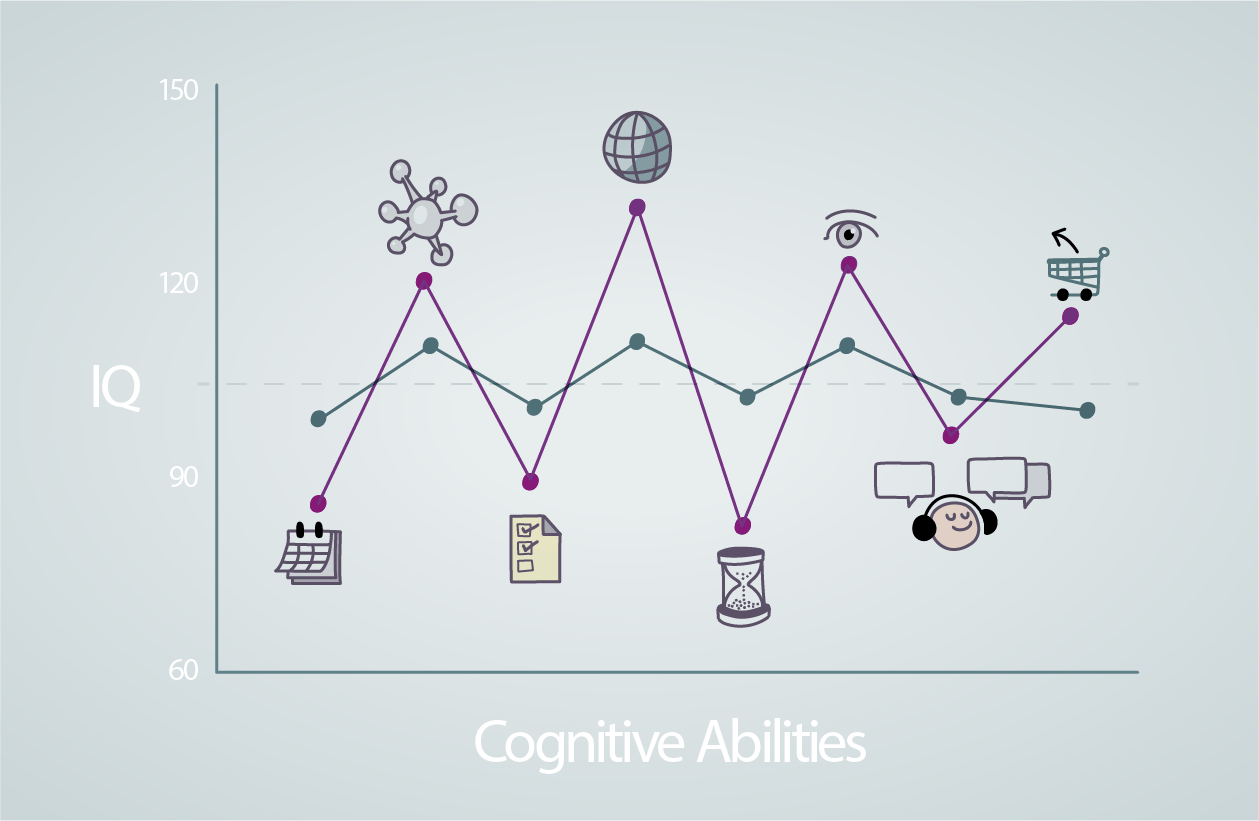
Many people with Tourette’s also experience other neurological or mental health conditions. The NHS commonly notes links with: ADHD OCD anxiety autism depression. These do not occur in everyone with Tourette’s, but they are common enough that clinicians often consider them as part of a full assessment.
At Exceptional Individuals, many of the people we work with have one or more of these conditions alongside Tourette’s. For example, we regularly support people with ADHD into work and help employers put appropriate workplace adjustments in place through Workplace Needs Assessments.
We also work with large numbers of people who identify with autistic traits, often coming to us to better understand their experiences at work, in education, or in daily life.
Because these conditions can overlap, people may need support that reflects the whole picture, not just one label. That is why our focus is on practical, individualised workplace support, alongside clear signposting to clinical and community services where medical input is needed.
Real-world examples
The examples below are based on lived experience shared with Exceptional Individuals. Names and details have been changed.
Case study 1 – office environment
A person working in an open-plan office experienced frequent throat-clearing tics that became more noticeable in quiet meetings. They worried about being seen as disruptive and felt anxious about drawing attention to themselves.
With simple adjustments, including being able to mute themselves during online meetings and having access to a quieter space, they were able to work comfortably and remain productive.
Case study 2 – customer-facing role
Someone in a public-facing role experienced head and facial tics that became more pronounced under pressure. They were concerned about how customers might react.
After discussing their needs with their employer, they agreed on changes to shift patterns and access to a calm space between interactions, which helped reduce fatigue and anxiety.
Tourette’s in everyday life
Tourette’s affects people in very different ways.
Some people find their tics have little impact on daily activities. Others may experience challenges with:
-
concentration and fatigue
-
social interactions
-
confidence and self-esteem
-
managing stress
-
being in quiet or high-pressure environments
At Exceptional Individuals, many of the people we support describe how the unpredictability of tics, and other people’s reactions to them, can sometimes be more difficult than the tics themselves. Feeling misunderstood or self-conscious can affect confidence, especially in education, work and social settings.
Many people with Tourette’s develop their own ways of managing or adapting to their tics over time, whether that is through routines, pacing themselves, or being open with people around them. Having understanding and supportive environments can make a big difference to how confident and comfortable someone feels in everyday situations.
Tourette’s in the workplace
In work settings, Tourette’s can sometimes affect:
-
speaking in meetings
-
customer-facing roles
-
being in quiet offices
-
managing stress or deadlines
Under the Equality Act 2010, Tourette’s may be considered a disability if it has a substantial and long-term impact on daily activities. This means some people may be entitled to reasonable adjustments at work.
https://www.gov.uk/rights-disabled-person
At Exceptional Individuals, we work with both individuals and employers to create environments where people with Tourette’s can do their best work. This might involve:
-
adjusting how meetings are run
-
providing quieter spaces
-
offering flexible working
-
helping teams understand what Tourette’s is and what it is not
Support is always based on the individual, not assumptions about a diagnosis.
How Tourette’s is treated
There is no cure for Tourette’s, but support and treatment can help many people manage their tics.
How Tourette’s is treated
There is no cure for Tourette’s, but support and treatment can help many people manage their tics.
According to NHS and NICE guidance, this may include:
-
behavioural therapies, such as Comprehensive Behavioural Intervention for Tics (CBIT)
-
medication in some cases where tics are severe or distressing
-
support for co-occurring conditions
NHS treatment guidance:
https://www.nhs.uk/conditions/tics/treatment/

Getting medical support
If you are concerned about tics or Tourette’s, the NHS recommends:
-
Speak to your GP:
https://www.nhs.uk/nhs-services/gps/ -
NHS Tourette’s information:
https://www.nhs.uk/conditions/tourette-syndrome/ -
Tourette’s Action (UK) – support, advocacy and helplines:
https://www.tourettes-action.org.uk/ -
NHS 111 (urgent advice when it’s not an emergency):
https://111.nhs.uk/ -
999 (if someone is in immediate danger)
-
Samaritans (24/7 emotional support):
https://www.samaritans.org/
Call 116 123 in the UK
About this page
This page is provided for general information and awareness.
Exceptional Individuals supports people with Tourette’s and other neurodivergent conditions through workplace inclusion, adjustments and understanding. We do not provide diagnosis, clinical screening or medical treatment.