
Culture Eats Policy for Breakfast: Why Neuroinclusive Workplace Culture Needs More Than a Checklist

Policies matter, but employees experience inclusion through everyday culture: how meetings are run, how managers communicate, how adjustments are discussed, and how safe people feel asking for what they need.
The phrase “culture eats policy for breakfast” means that culture can easily outperform written rules. In a workplace context, this means a policy may say that neurodivergent employees are supported, but the real test is what happens in day-to-day behaviour.
A neuroinclusive workplace culture is not created by a checklist alone. It is built through mindset, empathy, clear communication, manager confidence, practical adjustments and repeated everyday choices.
This article explores the illusion of inclusion checklists, why real inclusion starts with understanding, how workshops can turn policy into culture, and why neuroinclusive workplaces can strengthen retention, innovation, productivity and belonging.
The Illusion of Inclusion Checklists

The “illusion of inclusion checklists” describes what can happen when organisations rely on standard HR processes without creating meaningful cultural change. A workplace may have a neurodiversity policy, an equality statement or an adjustments process, while neurodivergent employees still experience barriers in everyday work.
This kind of superficial approach can leave some neurodivergent employees feeling pressure to mask their natural communication styles, sensory needs or working preferences in order to survive a more “neurotypical” environment.
Checklist-based inclusion can create friction when organisations:
- expect everyone to “just know” how to navigate meetings, promotions or informal workplace rules;
- implement rigid 9–5 schedules or require everyone to work in noisy open-plan offices;
- make key decisions in meetings with no written agenda, recap or action points;
- only discuss neurodivergence as a “superpower” or only from the employer’s perspective;
- change meeting times or deadlines at the last minute without explanation;
- expect employees to respond to vague feedback such as “be more of a team player”.
The illusion happens when a lack of adjustment requests is mistaken for a thriving, inclusive culture. In reality, neurodivergent employees may remain silent because they are worried about stigma, judgement or being seen as difficult.
Research by the Chartered Institute of Personnel and Development found that many employers say neuro-inclusion is a focus for their organisation, but neurodivergent employees do not always experience meaningful support in practice.[7] This gap between intention and experience is exactly why culture matters.
Real Inclusion Starts with Understanding
 Pexels image by Mikhail Nilov
Workplace inclusion is different from simply having diversity represented in an organisation. Inclusion is about what people experience: whether they feel respected, whether they can contribute, whether their needs are understood, and whether systems support different ways of working.
City & Guilds’ Neurodiversity Index 2025 highlights that some organisations are naming neurodiversity in policies, but practical gaps remain across areas such as health and safety risk, employee support and manager knowledge.[10]
Real inclusion starts by asking better questions. What is creating friction? Is the issue the person, or the way the work is designed? Are expectations clear? Are meetings accessible? Do managers know how to respond to adjustment requests? Are employees safe enough to be honest about what helps them work well?
Across EI’s workplace support and assessment work, we repeatedly see that neuro-inclusion becomes more effective when support is linked to the person’s actual working conditions. A policy may say that reasonable adjustments are available, but the practical difference comes from identifying what is creating friction: unclear instructions, sensory demands, workload planning, meeting structure, assistive technology, communication expectations or manager confidence.
This is why culture matters. Employees are more likely to use support when the workplace makes it safe, normal and practical to ask for what they need.
How Workshops Turn Policy into Culture
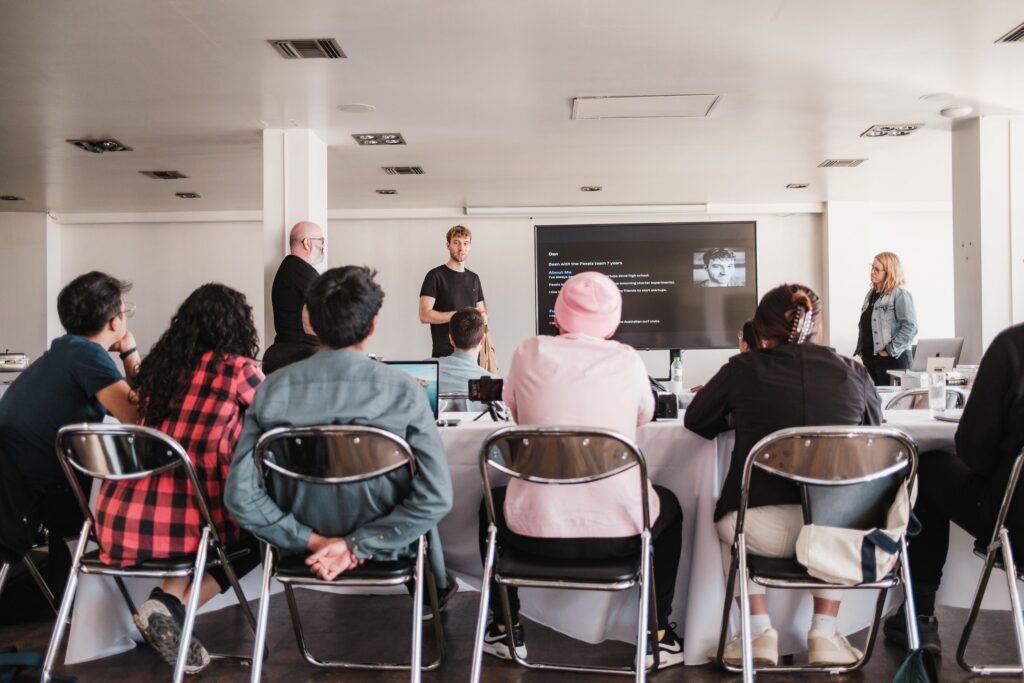
Workshops help turn neurodiversity policies into tangible culture by moving from theoretical compliance into practical, everyday behaviour change. They translate broad commitments into routines that teams can use, such as clearer communication, structured meetings, sensory awareness and more confident conversations about adjustments.
A well-designed workshop can give people a shared language. It can help managers and colleagues understand why small changes, such as written agendas, clearer briefs, flexible communication options or quieter working spaces, can make a meaningful difference.
For example, in EI’s public webinar, Building Neuro-Inclusive Workplaces: From Awareness to Action, Ruth-Ellen Danquah and Tania Martin explored why awareness is only the starting point. The discussion focused on how organisations can move from policy into practical behaviour change, including leadership buy-in, psychological safety, retention, clearer communication and measuring outcomes beyond training completion.[11]
This is the type of shift a workshop can create. It gives teams a shared language, helps managers notice where everyday barriers show up, and turns broad inclusion commitments into practical next steps.
Workshops can also help teams build:
- clearer communication;
- better meeting design;
- more confident managers;
- safer conversations about adjustments;
- practical changes to recruitment, onboarding and retention.
Explore EI’s neurodiversity workshops for employers to see how this support can help organisations move from policy into practical culture change.
Benefits of a Neuroinclusive Workplace Culture

A neuroinclusive workplace culture benefits neurodivergent employees, but it also improves the working environment for everyone. Clear agendas, written follow-ups, flexible working patterns and quieter spaces can reduce confusion, improve collaboration and make expectations easier to understand.
Many sources estimate that around 15–20% of the population may be neurodivergent, although experiences and support needs vary widely.[15] When workplaces recognise this, they can move away from one-size-fits-all systems and towards conditions that support different thinking styles.
EI has also explored how neurodiverse teams can be more productive when inclusive design is in place.[16] The important point is not that neurodivergent people are automatically more productive, but that teams can perform better when different strengths are recognised and barriers are reduced.
A neuroinclusive culture can support:
- Psychological safety: employees are more likely to ask for support before issues escalate.
- Retention: people are more likely to stay when they can work without unnecessary masking or repeated friction.
- Innovation: different thinking styles can help teams question assumptions and solve problems in new ways.
- Better management: managers become more confident in having practical conversations about adjustments, communication and workload.
- Clearer systems: meetings, feedback, recruitment and onboarding become easier for more people to navigate.
Deloitte’s work on neuroinclusion and innovation also highlights the value of different cognitive approaches, inclusive communication and recognition of unique strengths.[17] For employers, this strengthens the case for moving beyond awareness and embedding practical change.
Conclusion
Neuro-inclusion is not created by a policy document, a checklist or a single awareness session. These tools matter, but they only become meaningful when they are supported by a culture where employees feel safe to ask for what they need and where managers understand how everyday practices can create or remove barriers.
A neuroinclusive workplace culture is built through clear communication, structured meetings, flexible working, practical adjustments and confident conversations. It is the difference between inclusion as an intention and inclusion as a lived experience.
Build a More Neuroinclusive Workplace Culture
Policies are important, but employees experience inclusion through everyday culture: how meetings are run, how managers communicate, how adjustments are discussed and how safe people feel asking for what they need.
If your organisation is ready to move from awareness into practical behaviour change, book a neurodiversity workshop with Exceptional Individuals. Our workshops help teams build shared understanding, improve communication and turn neuro-inclusion into practical action.
If you are a manager or HR leader who wants more confidence supporting neurodivergent employees day to day, explore our manager training. This support is designed to help managers have clearer conversations, understand reasonable adjustments and create working conditions where neurodivergent employees can contribute well.
If you are a neurodivergent employee or individual reading this and recognising some of your own workplace experiences, you can join the waitlist for The EDGE for future support, resources and community from Exceptional Individuals.
Sources and Further Reading
- Using English. “Eat something for breakfast.”
https://www.usingenglish.com/reference/idioms/eat+something+for+breakfast.html
- Langeek. “To eat someone for breakfast.”
https://dictionary.langeek.co/en/word/366688?entry=eat%20someone%20for%20breakfast
- Exceptional Individuals. “What It Feels Like to Mask at Work When Neurodivergent.”
- Exceptional Individuals. “Why Managers Often Overlook Communication Styles – and How Neurodiversity Workshops Fix This.”
Why Managers Often Overlook Communication Styles – and How Neurodiversity Workshops Fix This
- Charlotte Mia Sperrin / Keidra Chaney, CPACC. “6 things you may be doing unknowingly that put neurodivergent employees at a disadvantage.”
https://www.linkedin.com/posts/keidrachaney_this-is-a-solid-checklist-i-personally-think-share-7335748462761684993-R-nP/
- iOH. “The Neuroinclusion Illusion: Closing the Gap Between Employer Perceptions and Employee Experience.”
- CIPD. “Neuroinclusion at work report 2024.”
https://www.cipd.org/uk/knowledge/reports/neuroinclusion-at-work/
- City & Guilds.
https://www.cityandguilds.com/
- CIPD. “Building Inclusive Workplaces: Assessing the evidence.”
https://www.cipd.org/globalassets/media/knowledge/knowledge-hub/reports/building-inclusive-workplaces-report-sept-2019_tcm18-64154.pdf
- City & Guilds. “City & Guilds Neurodiversity Index Report 2025.”
https://ndinstitute.co.uk/wp-content/uploads/2025/03/CityandGuildsNeurodiversityIndexReport2025.pdf
- Exceptional Individuals. “Building Neuro-Inclusive Workplaces: From Awareness to Action.”
- Oxford College of Management. “Neurodiversity in the Workplace: Beyond Awareness Days and Into Culture Shift.”
Neurodivergence in the Workplace: Beyond Awareness Days and Into Culture Shift
- PegSquared. “About PegSquared.”
https://pegsquared.co.uk/about/
- EY.
https://www.ey.com/en_uk
- Sonder. “How to embrace neuroinclusive practices for workplace wellbeing.”
How to embrace neuroinclusive practices for workplace wellbeing
- Exceptional Individuals. “Why Neurodiverse Teams Can Be 30% More Productive.”
- Deloitte. “The neurodiversity advantage: How neuroinclusion can unleash innovation and create competitive edge.”
https://www.deloitte.com/us/en/insights/topics/diversity-equity-inclusion/unleashing-innovation-with-neuroinclusion.html
- Exceptional Individuals. “Neurodiversity Workshops.”
- Exceptional Individuals. “Neurodivergent Tests.”